

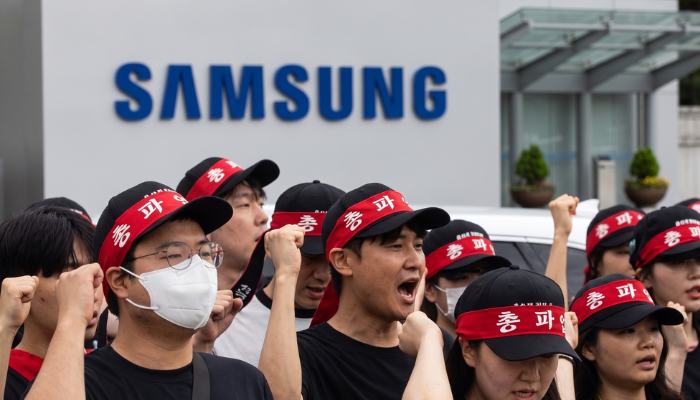
Samsung Electronics is facing one of the most significant labor disputes in its corporate history as tensions rise over employee compensation tied to the booming artificial intelligence semiconductor market. The conflict has triggered concerns among investors, government officials, and global technology companies that depend on Samsung’s chip production.
More than 45,000 employees are reportedly preparing for a large-scale strike that could last up to 18 days, beginning May 21. If the strike moves forward, it could become the largest industrial action ever faced by Samsung’s semiconductor division. The situation has already drawn attention worldwide because Samsung plays a critical role in global semiconductor manufacturing and AI infrastructure development.
The core issue behind the labor dispute is how Samsung distributes profits generated by the rapid growth of artificial intelligence technologies.
Over the past two years, demand for AI chips has surged globally as companies race to expand data centers, cloud computing systems, AI applications, smartphones, and advanced computing devices. Samsung’s memory chip business has benefited enormously from this trend because memory semiconductors are essential for running AI systems efficiently.
As profits increased, Samsung proposed major bonus payouts for employees working in its memory chip division. However, workers from other semiconductor units, especially the foundry and logic chip divisions, strongly opposed the decision because they believe their contributions to AI chip manufacturing are equally important.
Employees involved in producing advanced semiconductors for companies such as Tesla and NVIDIA argue that they should not receive significantly lower bonuses simply because their business units are less profitable.
Union leaders claim the growing gap in rewards is damaging employee morale and creating internal divisions across Samsung’s semiconductor operations.
The labor tensions have also exposed deeper organizational issues inside Samsung’s semiconductor division.
Samsung operates multiple semiconductor businesses under one structure, including memory chips, system LSI, and foundry manufacturing. While the memory business remains extremely profitable due to the AI boom, the foundry and logic chip businesses have struggled financially in recent years.
Industry experts say this imbalance has created friction between departments because employees working in similar environments are being rewarded very differently. Some analysts believe Samsung’s complex business structure has become increasingly difficult to manage as competition in the semiconductor industry intensifies.
Unlike specialized rivals such as TSMC or Micron Technology, Samsung aims to operate as a complete semiconductor provider that handles multiple chip technologies and manufacturing services. However, critics argue this strategy may now be creating operational and workforce challenges.
One of the biggest concerns for Samsung is the possible loss of highly skilled semiconductor engineers and researchers.
Workers and union representatives say many employees have already started exploring opportunities with competitors such as SK Hynix, which recently introduced more attractive compensation policies.
According to employees familiar with the situation, several experienced engineers have either transferred internally to Samsung’s more profitable memory division or are actively applying for positions at rival semiconductor companies.
Union leaders argue that unequal compensation could weaken Samsung’s long-term ambitions in advanced semiconductor manufacturing. Samsung Chairman Jay Y. Lee has repeatedly emphasized the company’s goal of becoming a global leader in logic chips and foundry services by 2030, but workers fear talent losses could slow that progress.
Employees have warned that workers in less profitable divisions may lose motivation if large differences in bonus payouts continue.
Samsung’s labor union is demanding several major changes to the company’s compensation system. These include removing bonus payout caps and allocating a larger percentage of annual operating profits to employees.
Union representatives argue that all workers contribute to Samsung’s overall success and should benefit fairly from the company’s AI-driven growth. They believe the current structure favors certain divisions while ignoring the contributions of other semiconductor teams.
Samsung executives, however, maintain that bonuses should reflect business performance and profitability. Company negotiators argue that some semiconductor units have generated significant financial losses over the past few years and therefore cannot justify the same level of bonuses as highly profitable divisions.
Samsung has also stated that it continues investing heavily in its foundry and logic chip businesses despite ongoing financial challenges because they remain strategically important for the company’s future.
The possible strike has raised fears of disruptions across global technology supply chains.
Samsung is one of the world’s largest producers of memory semiconductors, which are essential components used in AI servers, consumer electronics, cloud infrastructure, smartphones, laptops, and automotive technologies.
Analysts warn that a prolonged disruption in Samsung’s production could impact global AI development and semiconductor availability. Some financial experts estimate the strike could significantly reduce Samsung’s operating profits and create billions of dollars in sales losses.
The dispute has also sparked concern among international investors who worry about instability within one of the world’s most important technology companies.
The South Korean government is closely monitoring the situation because Samsung plays a major role in the country’s economy, exports, and global reputation in advanced manufacturing.
Business organizations and analysts have warned that labor instability at Samsung could damage confidence in South Korea’s semiconductor industry and weaken the country’s position in global supply chains.
Some experts also believe the outcome of the dispute could influence future labor negotiations across the technology sector. If unions succeed in securing major concessions through strike action, other companies may face similar demands from employees in rapidly growing AI-related industries.
Samsung’s labor dispute reflects a broader challenge facing the global technology industry as artificial intelligence transforms business operations and generates enormous profits.
Employees increasingly expect companies to share the financial benefits created by AI growth, while corporations continue balancing profitability, investment costs, and competitive pressures.
As the AI semiconductor race accelerates worldwide, Samsung now faces a critical test — maintaining its leadership in advanced chip manufacturing while addressing growing concerns from the workforce that helped build its success.
The outcome of this labor battle could shape not only Samsung’s future but also how major technology companies manage employee expectations during the rapidly expanding AI era.kforce demands in the new AI-driven economy.