

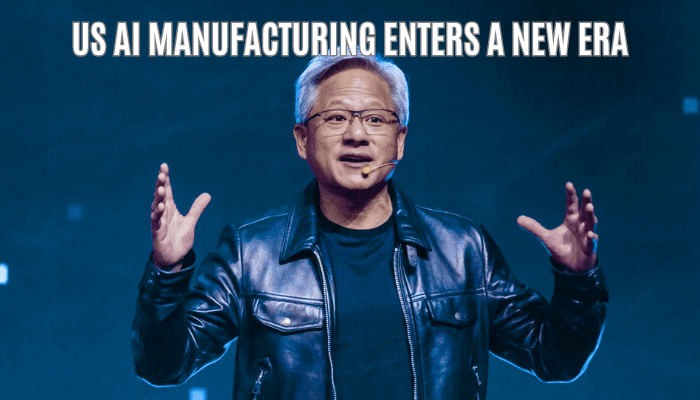
NVIDIA and Corning Incorporated announced a long-term partnership on May 6, 2026, to strengthen AI infrastructure manufacturing in the United States. The collaboration focuses on increasing the production of advanced optical connectivity solutions needed for modern AI systems.
As part of the agreement, Corning will increase its U.S.-based optical connectivity manufacturing capacity by 10 times. The company will also expand its fiber production capacity in the country by more than 50% to meet the fast-growing demand for AI infrastructure.
Corning plans to build three new advanced manufacturing facilities in North Carolina and Texas. This expansion is expected to create more than 3,000 high-paying jobs for American workers and strengthen the country’s manufacturing sector.
The expanded production will supply optical connectivity products used in hyperscale AI data centers powered by NVIDIA technology. AI workloads require thousands of GPUs working together, creating a strong need for high-speed optical fiber, photonics, and connectivity solutions to move large amounts of data quickly and efficiently.
Corning is widely recognized for inventing low-loss optical fiber and for its leadership in glass science and optical physics. The company’s expertise makes it well-prepared to support the increasing demand for AI-related infrastructure.
Jensen Huang said that AI is driving one of the largest infrastructure expansions in modern history and creating a major opportunity to strengthen American manufacturing and supply chains. He explained that NVIDIA and Corning are developing advanced optical technologies that will help shape the future of AI computing.
Wendell P. Weeks stated that NVIDIA’s progress in AI is helping expand advanced manufacturing in the United States. He added that the partnership will create thousands of high-quality jobs and prove that AI growth is also supporting American industry and manufacturing.
NVIDIA is a global leader in artificial intelligence and accelerated computing technologies. Corning is a materials science company with more than 175 years of innovation in glass, ceramics, and optical technologies used across many industries.
Both companies mentioned that their statements about future growth, manufacturing expansion, AI demand, and job creation are forward-looking statements. Actual results could differ because of risks such as economic conditions, supply chain challenges, market competition, trade policies, regulatory changes, and technology developments.